
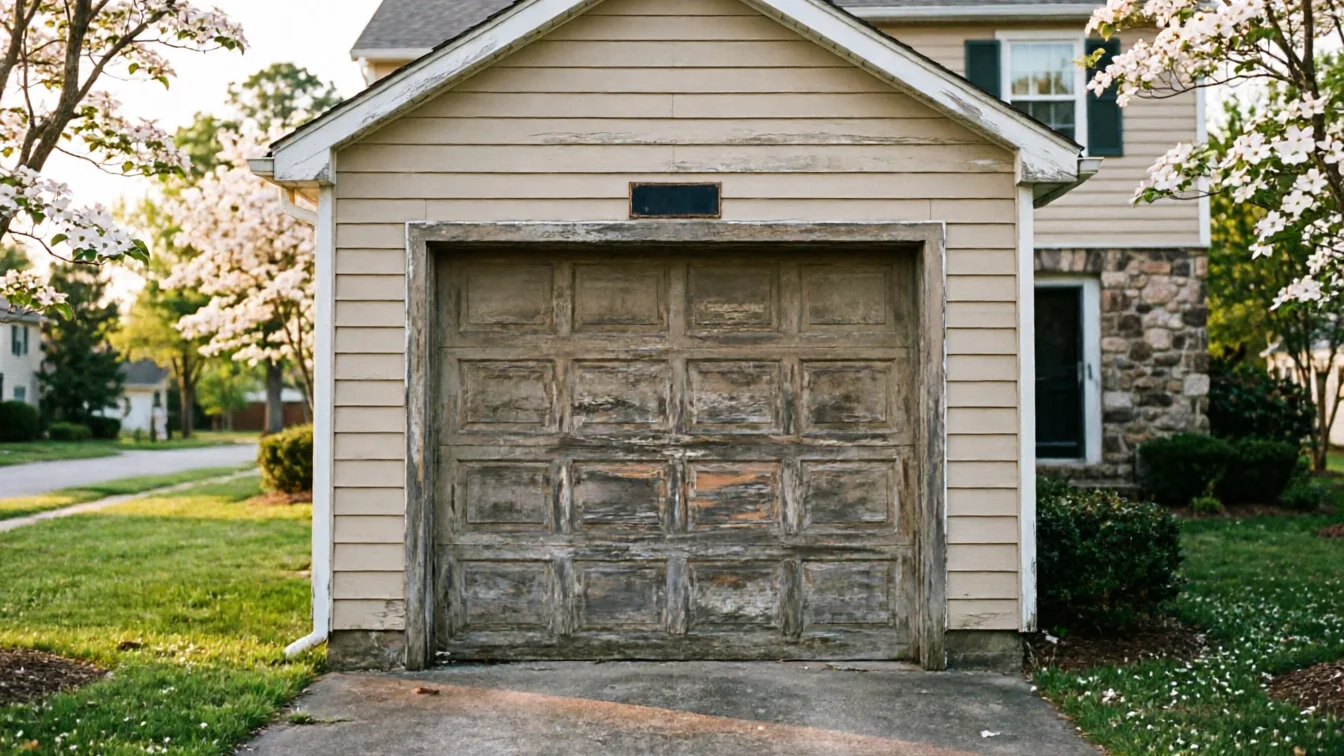
When an Old Door in Conyers Still Has Life Left
Conyers homes built from 1938 to 2012 often have original garage doors worth repairing, not replacing.
Read moreConyers homes built between 1938 and 2012 often have garage doors with no insulation rating, a real problem in cold winter swings. Here's what to check.
Local detail
Most people treat a garage door like a big wall and forget it's the single largest moving opening on the house. In this area, housing runs from 1938 all the way to 2012, with the median build year sitting at 1976. That matters because insulation requirements for garage doors didn't exist when most of these houses went up. Homeowners assume the door that's been there since the house was built is just "old" and leave it alone until something breaks.
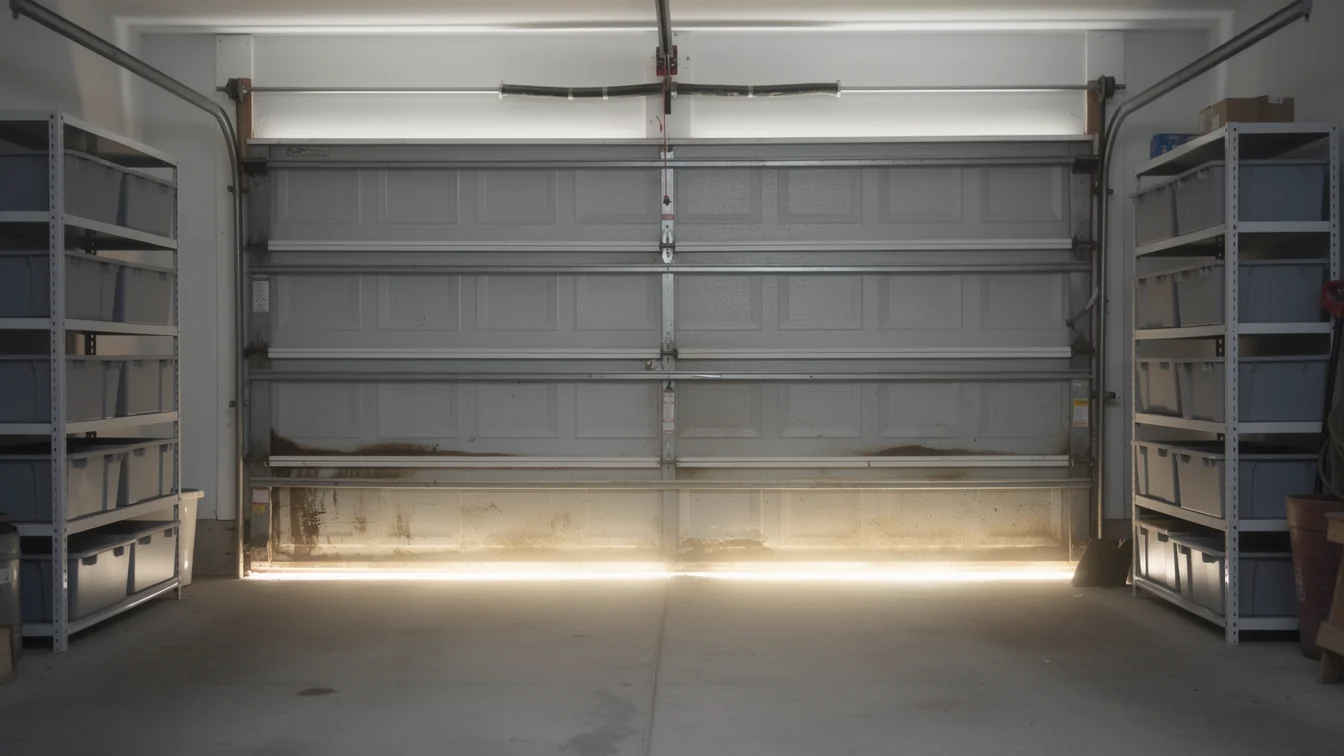
We see it most on houses from the heavier building period, the 1960s and 70s run that makes up a big share of the stock across the 17 named areas in this service territory. Those doors are single-layer steel, no foam core, no thermal break at the track. People weatherstrip the sides and call it fixed, but the door itself is still a sheet of metal with nothing behind it. That's not a repair, it's a patch on a door that was never built to hold a temperature difference in the first place.
The other mistake is waiting for a spring to snap before thinking about the door at all. By then you're making a decision under pressure instead of on your own schedule.
The area
This area sits in a cold-moderate climate band, not a mild one. That means real swings - cold mornings, warmer afternoons, repeated freeze and thaw through a chunk of the year. A steel door with no insulation layer moves with that swing fast. The metal contracts overnight and expands again by midday, and it does that on a cycle, year after year, on a door that's often 30, 40, even 50 years old given the 1976 median build date.
What that cycling does over time is crack the foam weatherstrip at the base, loosen screws at the hinges, and warp thin steel panels just enough that they stop sealing flush against the frame. You don't see it happen in one day. You notice it as a draft along the bottom of the door, or a line of cold air you can feel if you stand near it in January.
With 18,718 owner-occupied houses across the service area, a large number of garages are carrying a door that was never designed to manage this. The door isn't failing because it's broken - it's failing because it was built for a world without an insulation standard, and the climate here has been working on it every season since.
What we find
Call when you notice a cold spot along the garage wall that shares drywall with a living space, or when the floor near the door stays noticeably colder than the rest of the garage. Frost or condensation on the inside face of the panels in winter is another sign - that's moisture meeting a cold, uninsulated steel surface.
A door that rattles or flexes visibly when wind pushes against it has lost some of its structural stiffness, usually at the panel seams or the track hardware, and that's worth a look before it gets worse. If your energy bill runs high relative to the size of the house and you've ruled out the attic and windows, the garage door is a reasonable next place to check, especially on a house from the 1960s-70s building stretch that's common here.
We don't push a full replacement on every call. If the panels are sound and the hardware is just worn, a service visit can often get another few years out of what's there. We'll tell you straight if the door's steel is too far gone for a patch to be worth your money.
How we work
The core issue is simple: a lot of garage doors in this area predate any insulation requirement, because the houses themselves predate it. With a median build year of 1976 and stock stretching back to 1938, you've got decades of single-layer steel doors with no foam core and no thermal break, sitting in a climate that runs cold enough in winter to make that gap felt.
These doors weren't built wrong. They were built to the standard of their time, which didn't include thermal performance for a garage door at all. The problem shows up now because the climate hasn't changed and the door hasn't either - it's just gotten older, and the seals and steel have had more cycles of expansion and contraction to work against them.
Here's the honest limit: we don't retrofit insulation kits onto doors with bowed panels or rusted track. Gluing foam board into a door that's already out of square just hides a structural problem instead of fixing it. At a median household income of $70,101 in this area, most owners can reasonably plan for a proper insulated replacement door rather than layering a cheap fix onto hardware that's past its useful life.
Questions
If your house was built before garage door insulation was common - which covers a large share of homes here given the 1976 median build year - the door is likely a single steel layer with no foam core. You can usually tell by weight: an insulated door feels noticeably heavier when you lift it manually.
Sometimes, if the panels are flat and the track is square. Foam board kits can help on a sound door. We won't recommend that on a door with bowed panels, rust at the seams, or worn track hardware - in that case the honest answer is replacement, not a patch.
This area sits in a cold-moderate climate band with real temperature swings through the season. Older steel doors expand and contract with those swings, and the seals and panel seams loosen a little more each cycle, so the draft can feel worse in a sharper cold stretch.
Recommendation
More garage door guides for Conyers homeowners.
Conyers homes built from 1938 to 2012 often have original garage doors worth repairing, not replacing.
Read more
Conyers homes built between 1938 and 2012 carry different garage door hardware, and each makes a distinct sound before it fails.
Read more
Conyers homes run 1960s-70s stock on older hardware.
Read moreReady when you are
Conyers Garage Door Pros repairs and installs garage doors, springs and openers in Conyers, GA and the surrounding area.