
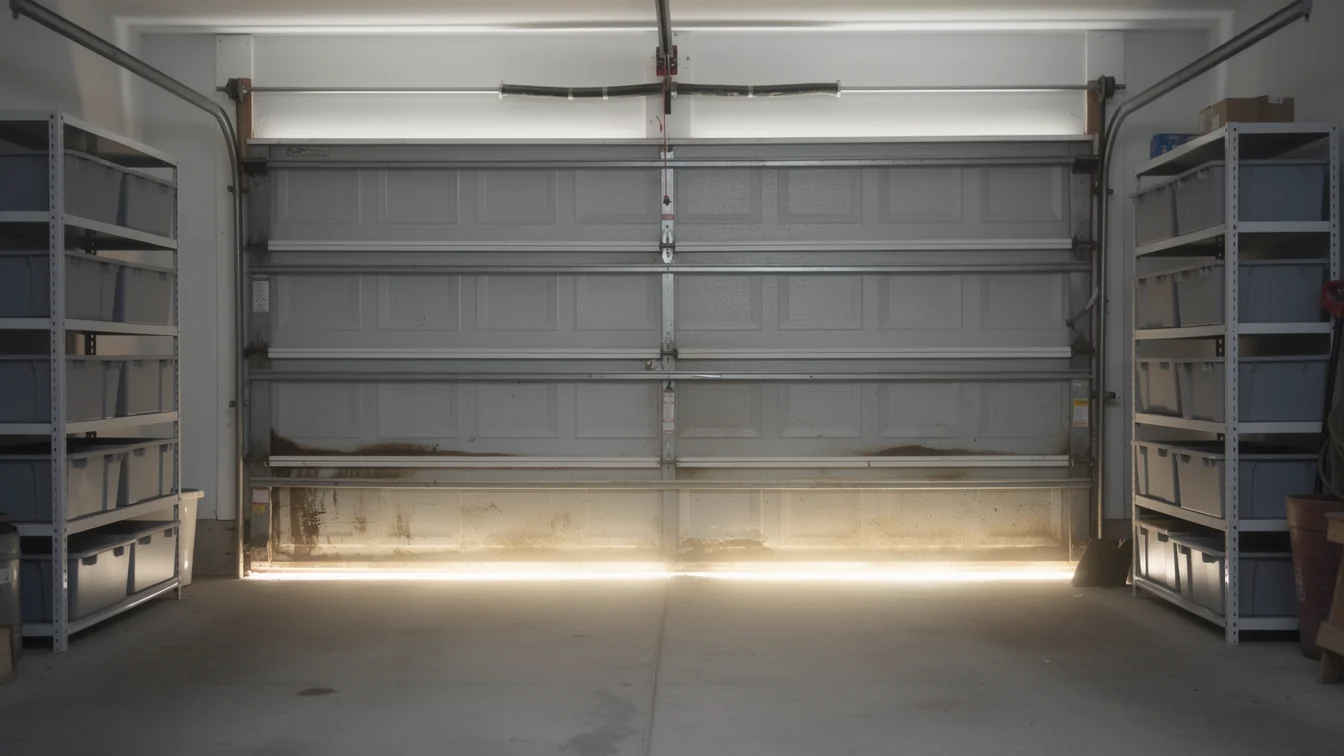
Why So Many Conyers Garage Doors Leak Cold Air
Conyers homes built between 1938 and 2012 often have garage doors with no insulation rating, a real problem in cold winter swings.
Read moreConyers homes built from 1938 to 2012 often have original garage doors worth repairing, not replacing. Here's how to tell what's worth fixing and what isn't.
Local detail
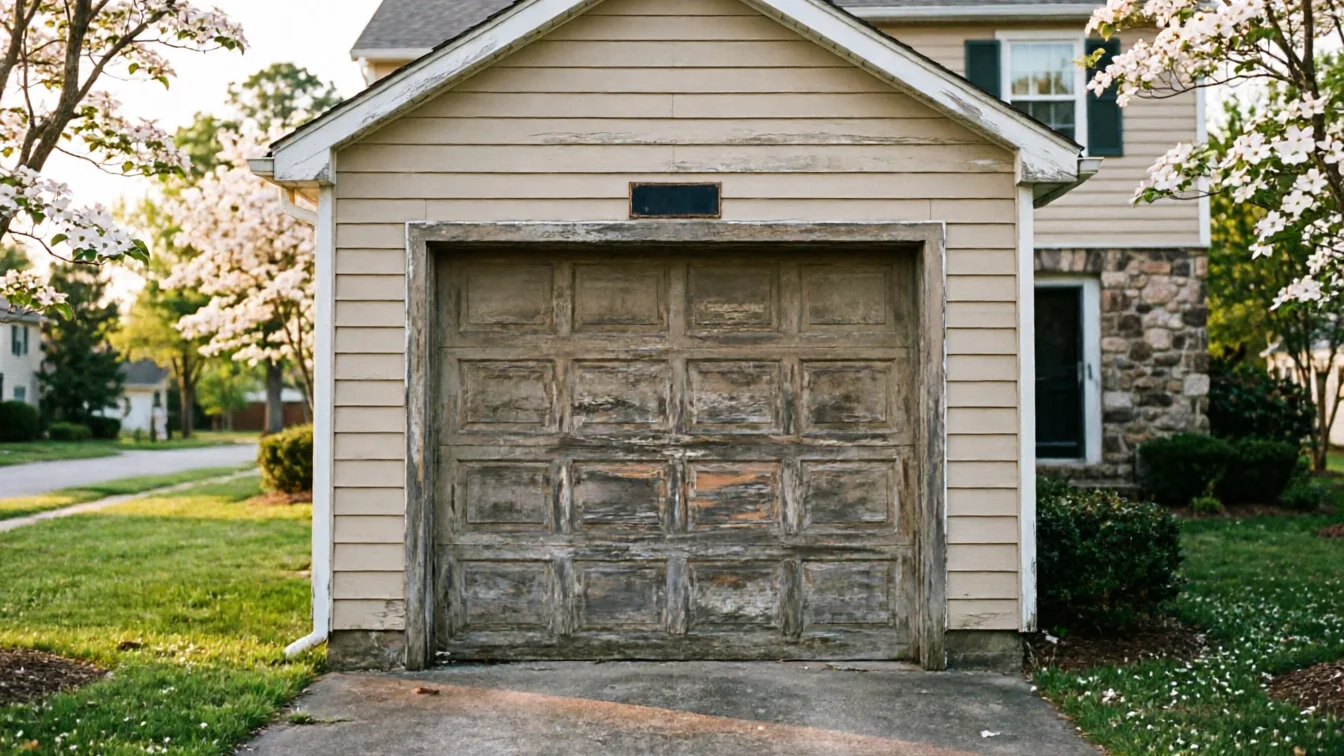
The mistake we see most often in Conyers is an owner assuming age alone means a door is done. Housing in this service area went up anywhere from 1938 to 2012, with the median build year landing around 1976, so a huge share of the doors we get called out to look at are the originals - or close to it. A door from that era isn't automatically junk. The panels on a lot of these are steel or wood that's held up fine; what fails first is almost always the spring, the rollers, or the opener bolted on later as an afterthought. Swapping the whole unit because one part quit is how people spend three times what the job needed. We've walked into garages where the owner had already priced a full replacement, and the actual fix was a torsion spring and a set of rollers. The flip side is also true - some owners nurse along a door that's genuinely past the point of a sensible repair, usually because nobody told them the difference between a door that needs a part and a door that needs retiring. Knowing which situation you're in starts with knowing what's actually original and what's already been swapped once.
The area
Conyers sits in a cold-moderate climate band, which doesn't sound dramatic, but it means steel track and torsion springs here go through a real seasonal swing - contracting in winter cold, expanding again as it warms. On a door that's original to a house built in the 1960s or 70s, that cycle has repeated for fifty-plus winters. Springs lose tension gradually under that kind of stress, and galvanized track can develop small misalignments that a newer door wouldn't show yet. Weatherstripping on older doors also wears out faster under repeated temperature swings than most owners expect, which shows up as drafts and light gaps at the bottom panel before anything else goes wrong. None of this means an old door is doomed. It means the parts most likely to need attention on a Conyers house built before the 1980s are predictable: spring tension, track alignment, and seals - in roughly that order. If a door from that generation is still opening smoothly and closing flush, the condition of the structure itself is usually fine. It's the moving parts that have been absorbing decades of temperature change, not the panels.
What we find
Call before you decide anything if the door is noticeably heavier to lift by hand than it used to be, if it's off track, or if a spring has visibly snapped - those aren't jobs to guess at. We'll be honest about the one limitation here: we don't stock every obsolete panel or hardware size for doors built decades ago, and matching a torn panel on a true original from the 1970s sometimes means a longer wait on parts than a straightforward spring job. That's worth knowing going in. What we can tell you on the spot, usually in one visit, is whether the door you've got is a repair or a replacement - we look at the track, the spring type, the bottom panel condition, and the opener separately rather than writing off the whole unit because one piece failed. With 18,718 owner-occupied houses across this service area, a lot of them carrying original torsion hardware, that kind of call is the bulk of what we do. If you're not sure which category your door falls into, that's the question to ask before you ask for a quote on a new one.
How we work
The real problem isn't the door - it's the guesswork owners get stuck with when nobody separates a cosmetic issue from a structural one. At a median household income of $70,101 across this service area, replacing a door outright isn't a call most people make lightly, and it shouldn't need to be made on a guess. Across roughly 40,195 households here, the housing stock runs mostly 1960s and 70s construction, which means the hardware behind a lot of these doors is decades past its original install and nobody's ever had it properly assessed. The door still works, so it gets ignored, until a spring lets go or a cable frays and it stops working all at once. That's usually the point an owner calls assuming the worst. More often than not, on a door from that generation, the fix is a spring, a cable, or a set of rollers - not a new door. The honest answer is that worth fixing isn't about the year the door was built; it's about which specific part failed and whether the rest of the unit is still sound.
Questions
Age by itself doesn't decide that. A lot of Conyers houses have doors from the 1960s and 70s still running fine on their original panels. What matters is which part failed - a snapped spring or worn rollers are almost always repairable, while a badly rusted or cracked panel on a very old door may not be worth patching.
In this climate band, torsion springs lose a bit of tension as temperatures drop, and track can tighten slightly with the cold. On an older door that's been cycling through decades of seasonal swings, that effect is more noticeable than on a newer one.
Sometimes, but not always on the spot. Matching a panel or specific hardware size on a true original from the 1970s can take longer than a standard spring or roller job, since we don't keep every obsolete size in stock. We'll tell you upfront if a part needs to be ordered.
If the door is hard to lift by hand with the opener disconnected, that's spring tension, not the opener. If it lifts easily by hand but the opener struggles or makes noise without moving the door, the problem is likely the opener or its gearing, not the spring.
Recommendation
More garage door guides for Conyers homeowners.
Conyers homes built between 1938 and 2012 often have garage doors with no insulation rating, a real problem in cold winter swings.
Read more
Conyers homes built between 1938 and 2012 carry different garage door hardware, and each makes a distinct sound before it fails.
Read more
Conyers homes run 1960s-70s stock on older hardware.
Read moreReady when you are
Conyers Garage Door Pros repairs and installs garage doors, springs and openers in Conyers, GA and the surrounding area.