
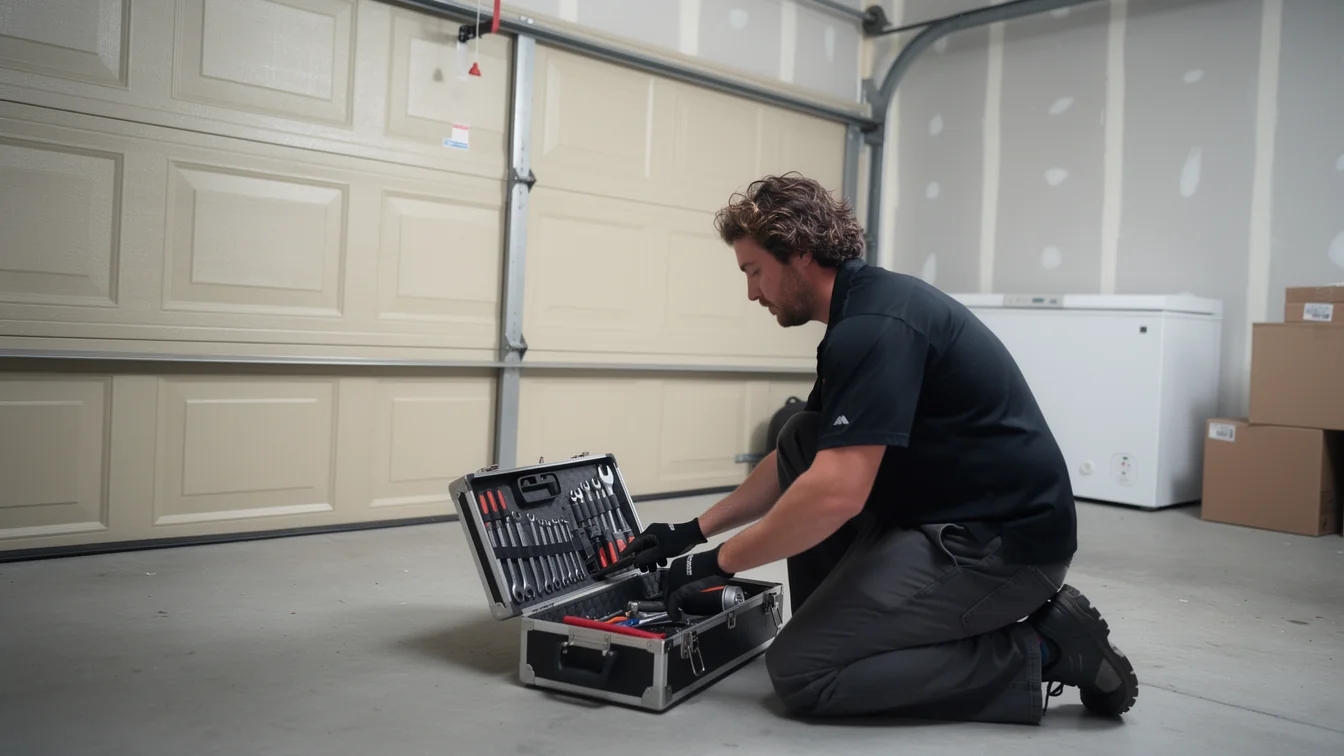
What Actually Happens During a Conyers Service Call
Conyers homes run 1960s-70s stock on older hardware.
Read moreHow Conyers' 1960s-70s housing stock and cold-moderate winters combine to make openers fail during power cuts, and what actually needs a call versus a flashlight.
Local detail
The first mistake is assuming the opener is the problem when the real issue is the power. Most houses in this service area went up in the 1960s and 70s, with the overall span running from 1938 to 2012 and a median year of 1976. That means a lot of openers here are second or third replacements, not the original unit that came with the house - garages from that era were wired for a single outlet and a light, not for a modern opener with a battery backup board, a camera, and a Wi-Fi module all pulling from the same circuit.
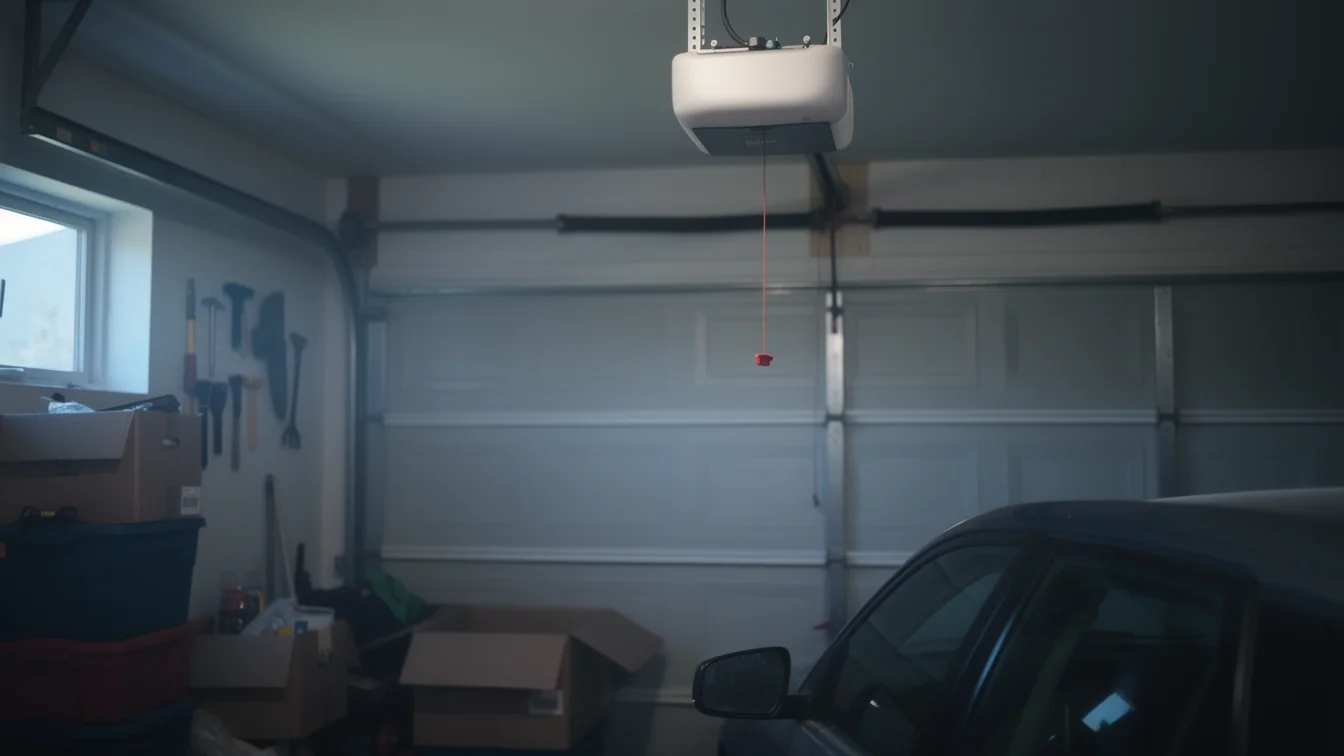
The second mistake is not knowing where the manual release is, or finding it seized shut because nobody has pulled it since the house changed hands. On a house built in the 70s, that cord has usually outlived at least one opener already and nobody remembers which parts match which unit. When the power drops and the door won't respond, people start pulling on brackets and rail covers instead of the one red handle that actually disconnects the carriage. That's how a five-minute manual release turns into a bent rail and a bill.
The area
Conyers sits in a cold-moderate climate band, which means winter cold snaps are common enough to matter but not severe enough to justify insulated doors as a default. That band still brings the kind of weather that knocks lines down - ice on branches, a transformer trip, a few hours or a night without grid power. A door that's up when the outage hits stays up. A door that's down stays down. Which one you get depends entirely on when the power cut landed relative to your last use, not on anything you did wrong.
Cold also stiffens old grease on tracks and rollers that haven't been serviced, and it makes circuit boards in older opener units more prone to a hard reset after the power comes back rather than picking up where they left off. None of this is dramatic. It's just enough friction, in a climate that isn't extreme, to turn a routine outage into a stuck door on the one cold morning you actually need to get the car out.
What we find
Call when the opener has power but won't respond to the remote or the wall button after an outage - that's usually a board that needs a reset or a logic board failure, not something to keep hitting the button on. Call when the manual release cord is seized or the handle snaps off in your hand; forcing a door on a frozen or worn release track can bend the carriage and turn a free fix into a parts job. Call if the door drops suddenly when you pull the release with nothing holding it, which means the spring side was already compromised and the outage just exposed it.
You don't need a call for a door that simply won't open because the power's out and the manual release works fine - that's expected, and it resolves itself once the power's back or you've released it by hand. Save the call for when the mechanism itself doesn't come back after power is restored.
How we work
With 40,195 households in the service area and a median income of $70,101, most owners here are not replacing an opener until it actually fails, which keeps a wide mix of old and new units in service at the same time. Some of those openers predate battery backup as a standard feature. Some have backup batteries that are five years old and dead without anyone knowing, because nobody tests a battery backup until the power is already out.
That mismatch between housing stock and opener age is the real story behind most "my door won't work" calls after a power cut - not a defective door, just an old opener meeting a short outage at the wrong moment. One limitation worth saying plainly: we don't do electrical panel work or whole-house generator hookups. If your outages are a wiring problem upstream of the opener circuit, that's an electrician's job, and we'll tell you that instead of working around it.
Questions
On older units, a power cut can trip the board into a state where it needs a manual reset - unplug it, wait about ten seconds, plug it back in. If it still won't respond, the board itself may have failed, which is common on units that have been running since before battery backup was standard.
Conyers is in a cold-moderate climate band, so outages tend to be short, but even a short one at the wrong time can leave your car trapped. A battery backup isn't required, but it's worth asking about if your opener doesn't already have one.
Don't force it. On older houses the release mechanism can seize from age or cold-stiffened grease. Forcing it risks bending the carriage. If the handle won't pull cleanly, that's a call, not a DIY fix.
Recommendation
More garage door guides for Conyers homeowners.
Conyers homes run 1960s-70s stock on older hardware.
Read more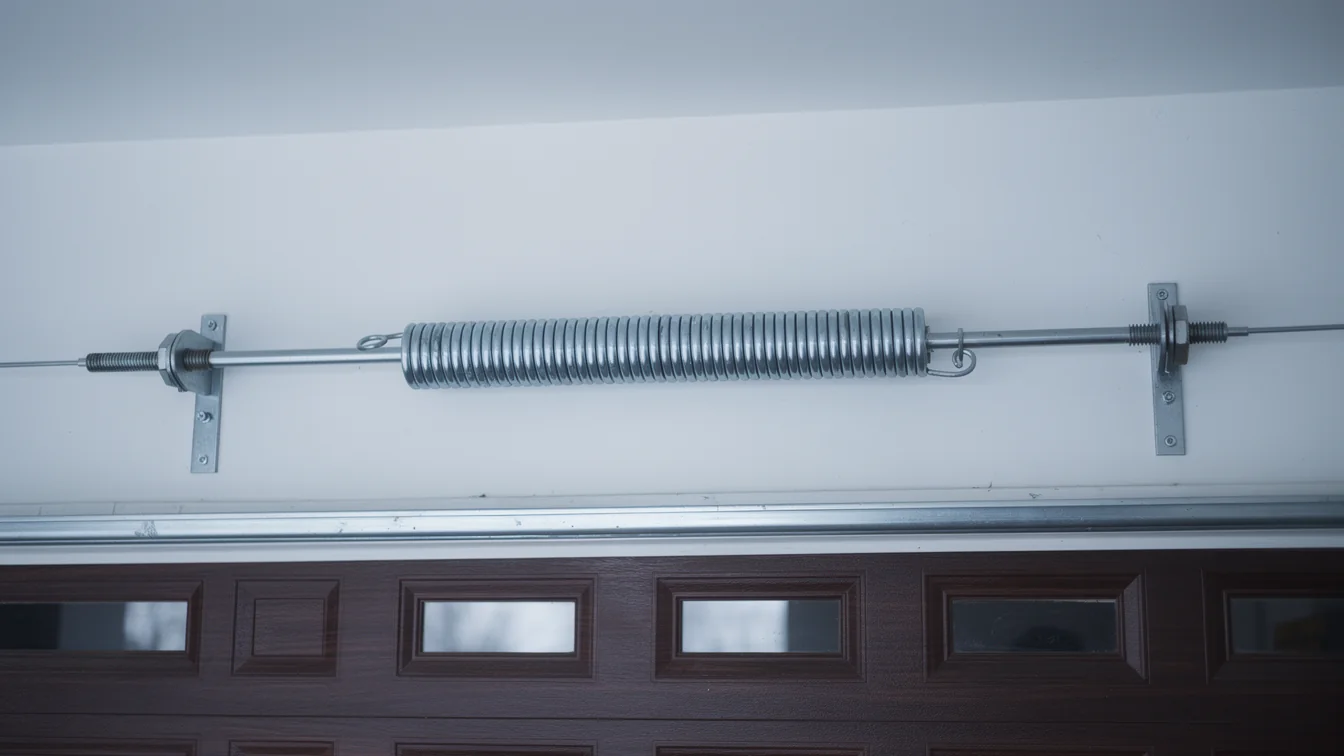
Why garage door springs snap in cold weather on Conyers homes built across a wide range of years, and what the 17-area local housing stock means for repair timing.
Read more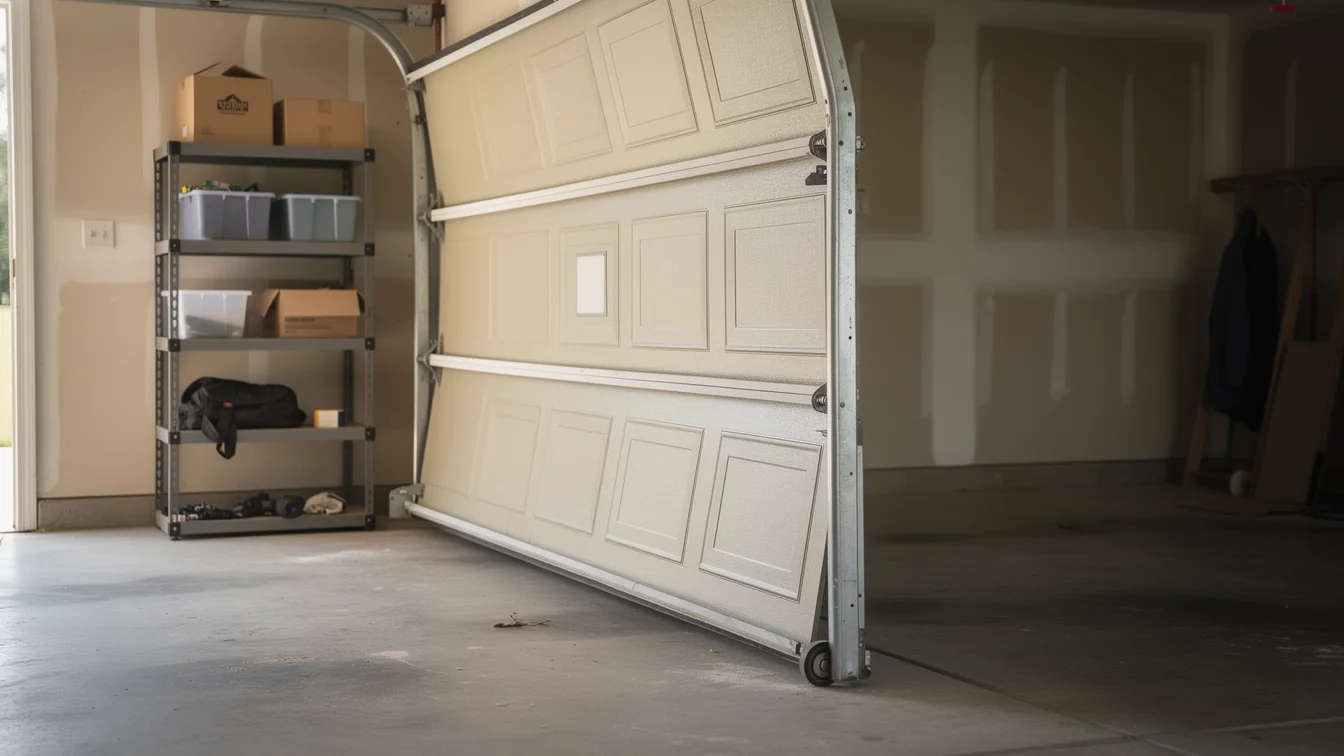
Most Conyers garage doors date to the 1960s-70s building boom.
Read moreReady when you are
Conyers Garage Door Pros repairs and installs garage doors, springs and openers in Conyers, GA and the surrounding area.