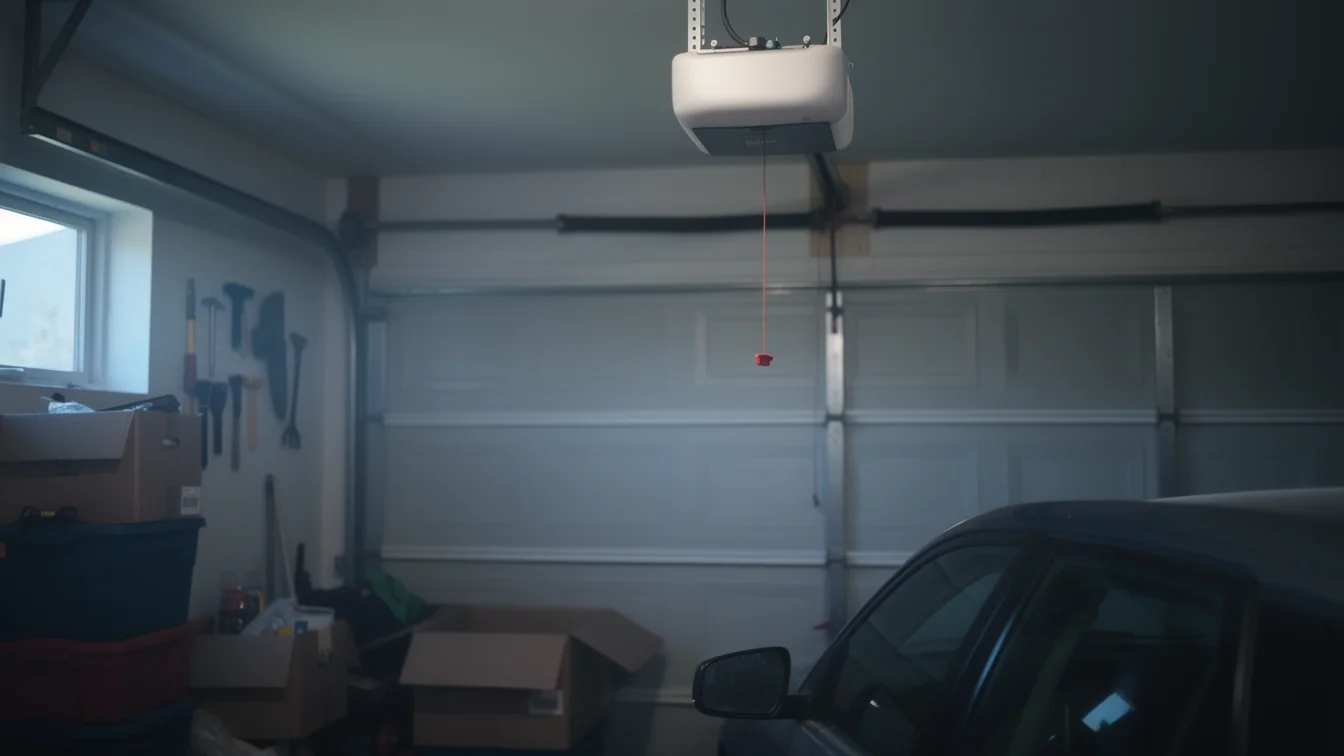
Openers, Power Cuts, and the Houses Around Conyers
How Conyers' 1960s-70s housing stock and cold-moderate winters combine to make openers fail during power cuts, and what actually needs a call versus a flashlight.
Read moreConyers homes run 1960s-70s stock on older hardware. Here's what a real service call checks, why it matters here, and when to call versus wait.
Local detail
The most common mistake we see in Conyers is treating a garage door like it's one part instead of a system. Someone hears a squeak, sprays WD-40 on the hinges, and calls it done. Meanwhile the real issue is a track that's gone out of plumb or a spring that's a season away from snapping.
This matters more here than in a newer subdivision. With housing in this area built mostly between 1938 and 2012, and a lot of it dating to the 1960s and 70s, a good chunk of the doors we open up still have original or first-generation replacement hardware. Extension springs instead of torsion, steel tracks that have shifted a quarter inch over fifty years of settling, openers bolted to framing that was never rated for the load. None of that shows up as a single symptom. It shows up as "the door's been acting up for a while."
The other error is waiting for total failure before calling anyone. A door that's hard to lift by hand, or that reverses halfway up, is already telling you something specific. Ignoring it usually turns a $150 adjustment into a full spring or track replacement.
The area
We're in a cold-moderate climate band here, not the deep freeze you get further north, but enough temperature swing through the year to matter for steel and lubricant. Springs lose a measurable amount of tension as metal contracts in cold snaps, then the same door feels heavier on a 38-degree morning than it did in August. Owners read that as the opener failing when it's really the spring.
On older stock, especially doors matching that 1976 median build year, the steel tracks and rollers were spec'd for a lighter door than what often gets installed as a replacement today. A heavier insulated panel on an old track system puts more load on hardware that was never designed for it. We see track separation and roller wear on these setups more than on newer builds.
Humidity cycling also plays a role on wood-framed jambs in this area's older housing stock. The frame swells and shrinks enough over the years to throw off door alignment, which then shows up as a door that binds on one side or won't seal at the bottom. It's rarely the door itself. It's what it's attached to.
What we find
Call before the door stops working, not after. A spring that's visibly stretched, a cable that's frayed at the drum, or a door that drops more than an inch when you release it from halfway are all signs you're close to a full failure, not a minor annoyance.
Given how much of the housing in this service area sits in that 1960s-70s band, we tell people with original hardware to get it looked at proactively rather than waiting for a break. Parts for some of these older track and spring configurations aren't something we keep on the truck in bulk, and ordering them adds days you don't want to lose if the door is stuck shut.
If your opener is cycling but the door barely moves, or you hear a loud bang followed by the door refusing to open at all, that's almost always a broken spring. Don't try to force it open manually. Get it assessed before anyone touches the panel.
How we work
The honest problem with a lot of service calls in this area is mismatch: newer opener, older door and track, or newer door hung on hardware installed decades ago. With 18,718 owner-occupied houses across this service area and a median household income of $70,101, most owners replace parts incrementally rather than doing a full system swap, which is reasonable, but it means we often find three different hardware generations on one door.
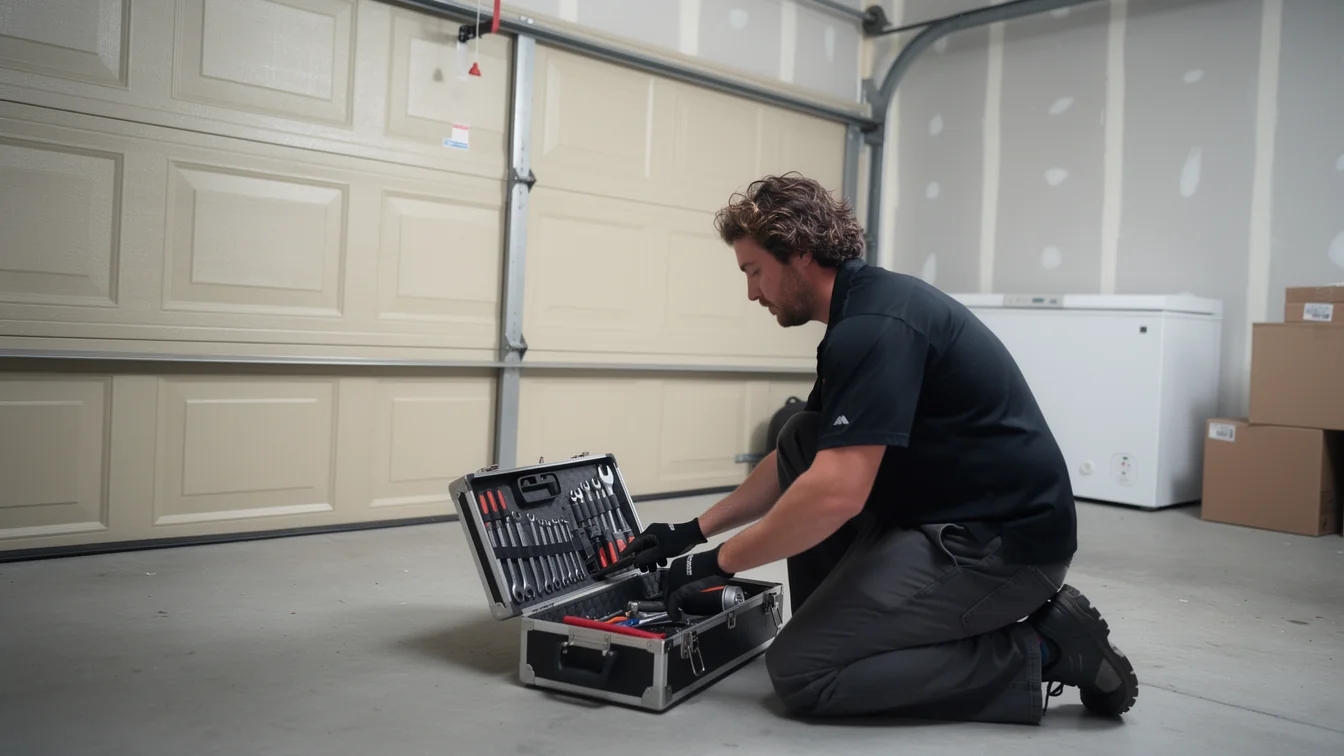
A full service call checks the spring tension and wear, track alignment front to back, cable condition at both drums, roller type and wear pattern, opener force settings, and the weather seal at the bottom panel. We don't upsell a full door replacement when a spring and a track adjustment will get another decade out of it. We also won't pretend a 1970s door with a wood jamb that's rotted through is worth patching. Sometimes replacement really is the right call, and we'll say so plainly instead of running up a repair bill on something that's not coming back.
Questions
Cold weather makes the spring steel contract slightly, which reduces tension. In this area's cold-moderate climate, that's usually a seasonal tension adjustment rather than a sign the spring is failing outright, though it's worth having checked if the difference is dramatic.
Yes. A lot of homes in this service area date to that era, and the original track and spring hardware wasn't always sized for heavier replacement doors installed later. We check for that mismatch specifically on older houses.
We work across this service area, including communities like Oxford, Porterdale, Lithonia, and Walnut Grove, among the other nearby towns within roughly a 15 to 20 mile radius.
Sometimes. If the jamb or frame has deteriorated badly, or the door itself is original from a much older build, a repair can end up being a stopgap. We'll tell you when replacement makes more financial sense than another patch.
Recommendation
More garage door guides for Conyers homeowners.
How Conyers' 1960s-70s housing stock and cold-moderate winters combine to make openers fail during power cuts, and what actually needs a call versus a flashlight.
Read more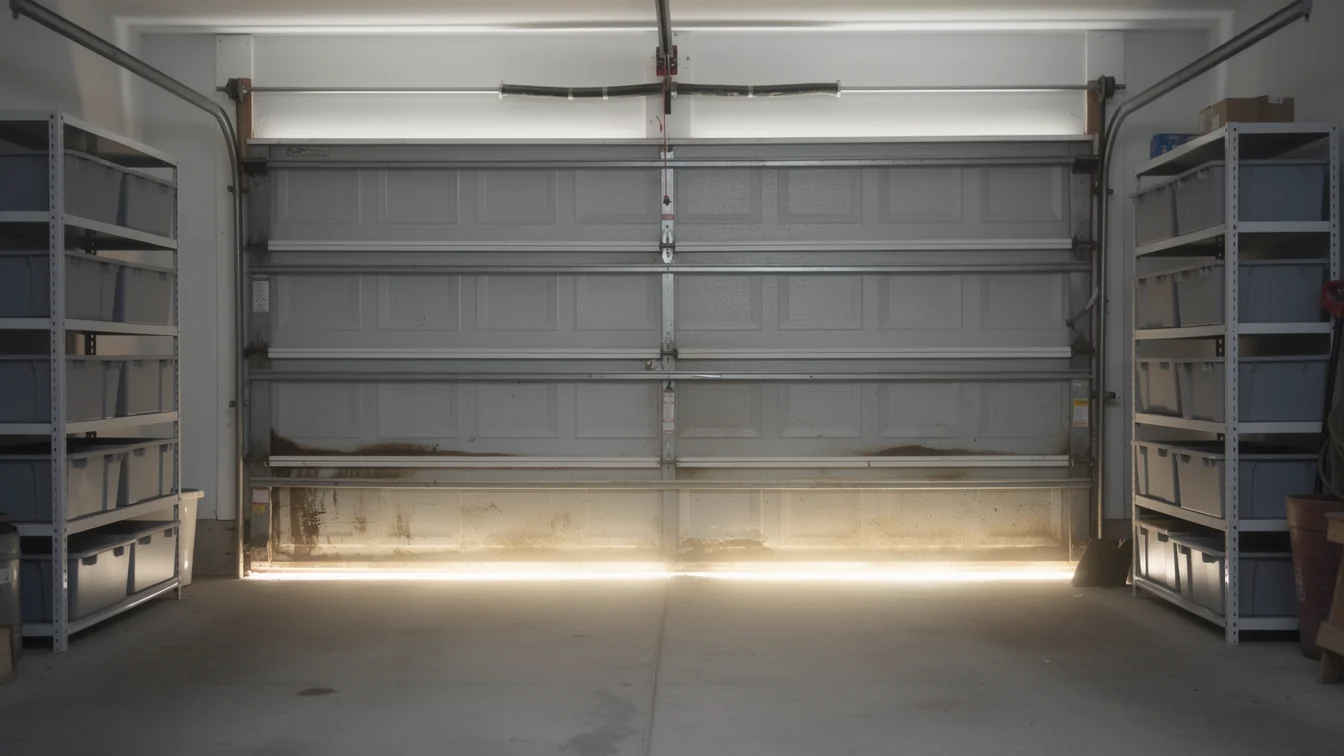
Conyers homes built between 1938 and 2012 often have garage doors with no insulation rating, a real problem in cold winter swings.
Read more
Conyers homes built between 1938 and 2012 carry different garage door hardware, and each makes a distinct sound before it fails.
Read moreReady when you are
Conyers Garage Door Pros repairs and installs garage doors, springs and openers in Conyers, GA and the surrounding area.